A few days ago, while feeling frozened (yes, new word) by my calendar, I had one of those small but honest realizations: I spend so much time making sure everyone else has their special time, whether it be their winter sport, time with their friends, “core memory makers” and their favorite meals… I often forget to give a gift to myself- REST. And if I’m feeling that way, chances are many of our campers are, too.
Winter has a quiet way of reminding us that rest isn’t indulgent, we aren’t being lazy—it’s essential. Nature does it effortlessly: the trees slow their energy, the days shorten, animals settle into rhythms that conserve strength. But humans? We push right through, hoping that if we just “get through this week,” the next one will magically feel lighter.
At camp, it is really very different.
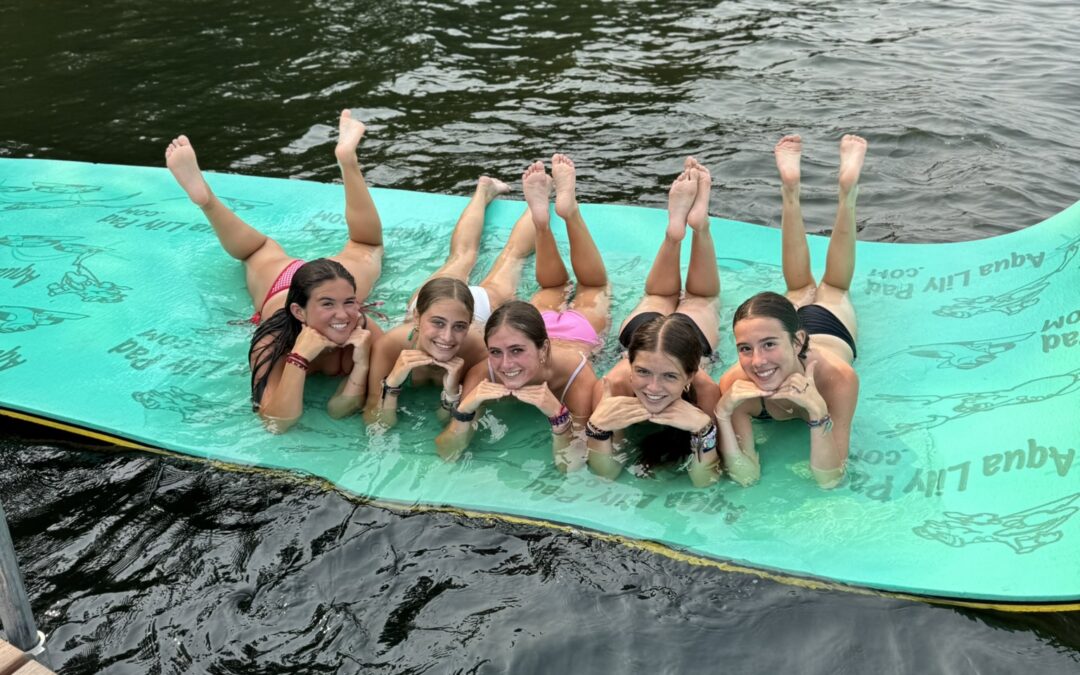
One of the things I’m proudest of at Kamaji is how intentionally we build rest into our days. The outside world often conditions kids (and us as parents!) to stay constantly busy—school, sports, homework, repeat—which is why camp offers a different rhythm. Every day includes time for kids to slow down, breathe, and choose how they want to recharge.
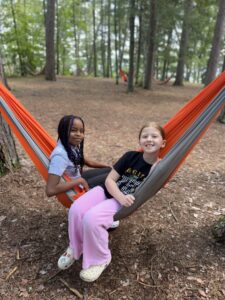 Rest Period is one of the best examples. It may sound simple—a quiet hour after lunch—but it’s often the time campers (and counselors!) all need. It’s where friendships deepen over quiet giggles and friendship bracelets, where campers read, write letters (at least twice a week!), braid hair, draw, or simply stare at the grain in the wood next to their bed and let their thoughts drift (yes, that’s a valid activity!). Campers leave rest period, more centered, more patient, more ready to take on the next adventure- third period here they come.
Then there are our Free Periods, another piece of camp that feels small but is deeply impactful. Kids get to choose how to spend that time. Swim, play tetherball, work on friendship bracelets, sit on the stone steps, finish an art project, take a shower, or just be (and this usually means sitting on “The Pig”). That autonomy—the chance to listen to what they need—is something many kids rarely get the other ten months of the year.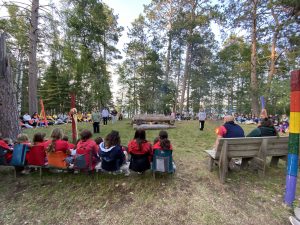
Parents are often surprised to hear that campers’ favorite Evening Programs are Council Fire and Camp History Night. During each of these programs campers are sitting and listening. During Council Fire it is underneath a canopy of red pines. As we listen to stories and songs, I watch campers trace the dirt with their fingers, stare at the sky in the hopes of catching a glimpse of our eagles and watch the smoke drift lazily up towards the clouds.
Camp History night is a favorite because they get to listen to an old lady (it’s me, I’m the old lady) tell the story about Kamaji. How it started and where traditions began. They ask me the same stories every summer, as if on cue, we play our roles and we all take comfort in that.
Some camps have done away with Rest Periods. What if kids “get bored”? Let’s fit in another activity or project instead. And I say, is that so bad? Isn’t it in these times that we can collect our thoughts, slow down, be present? I’ve come to believe that one of the most important things camp teaches in addition to resilience and independence, is the ability to recharge. It is important to understand when your internal battery is dipping and to have a few go-to ways to restore it. Sometimes we must force ourselves to stop. Slow down, and just let ourselves sit. And maybe that’s a lesson for us grownups, too.
So, as we move through this winter season, I hope you’ll give yourself permission to build in your own versions of Rest Period and Free Period. Ten minutes with a hot cup of coffee- not a reheated one. A short walk without phoning into a conference call. Letting your kids have an unstructured afternoon without orchestrating it. And definitely sit in front of a fire at some point. These tiny pockets of stillness add up, hopefully you can find some peace and comfort in these moments.
The truth is, none of us can give our best when we’re running on empty. Not every night or has to be a core memory or a family tradition. Camp reminds me every summer: when we protect time for rest, to slow down—for ourselves and our kids—everything else becomes lighter, brighter, and more joyful.
Here’s to slowing down, even just a little, during these winter months. We all deserve it.